Shining a light on creativity as a doorway to community-led mental healthcare
Jun 22, 2026
Mental health care doesn't always begin with words. Sometimes, it begins with creativity. Discover how two Ember Innovators are using arts-based approaches to expand access to community-led mental healthcare.
Ember at Marmalade 2026
In our work with community-led mental health organisations, we’ve witnessed arts-based approaches giving more people access to mental health support, that really works for them. We intend to increase the visibility of these approaches so they can be adopted on a wider scale and offer more people individualised tools to thrive.
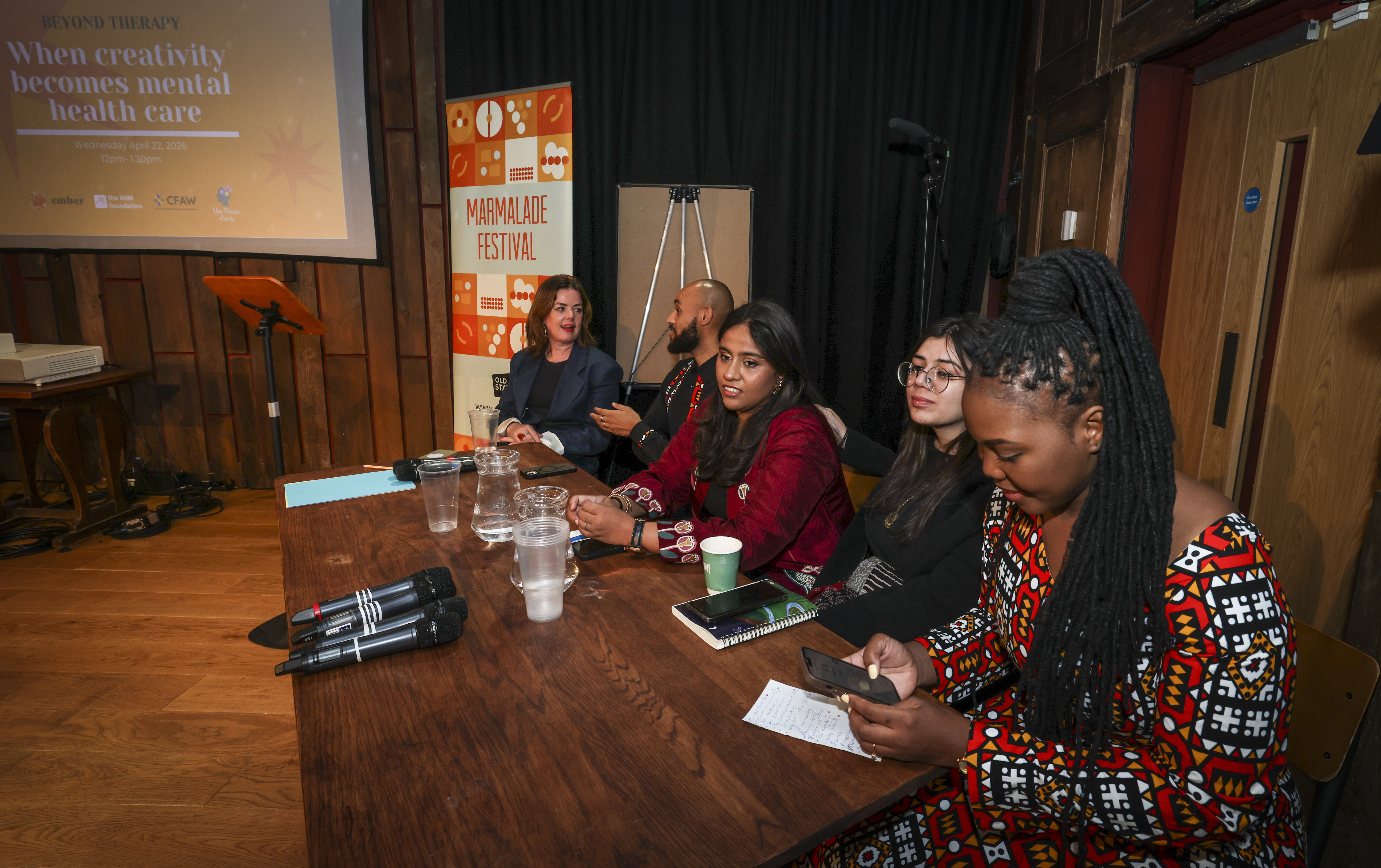
During Marmalade Festival, Ember supported two inspiring mental health partner innovators from our current cohort: Centre for Arts-Based Methodologies (CFAW) and Um Pouco d’Arte (“A Little Bit of Art”), as they brought their creative, arts-based approaches to the global stage.
Learn more about CFAW here.
Learn more about Um Pouco d’Arte here.
Photos by: Elizabeth Dalziel.
Why art?
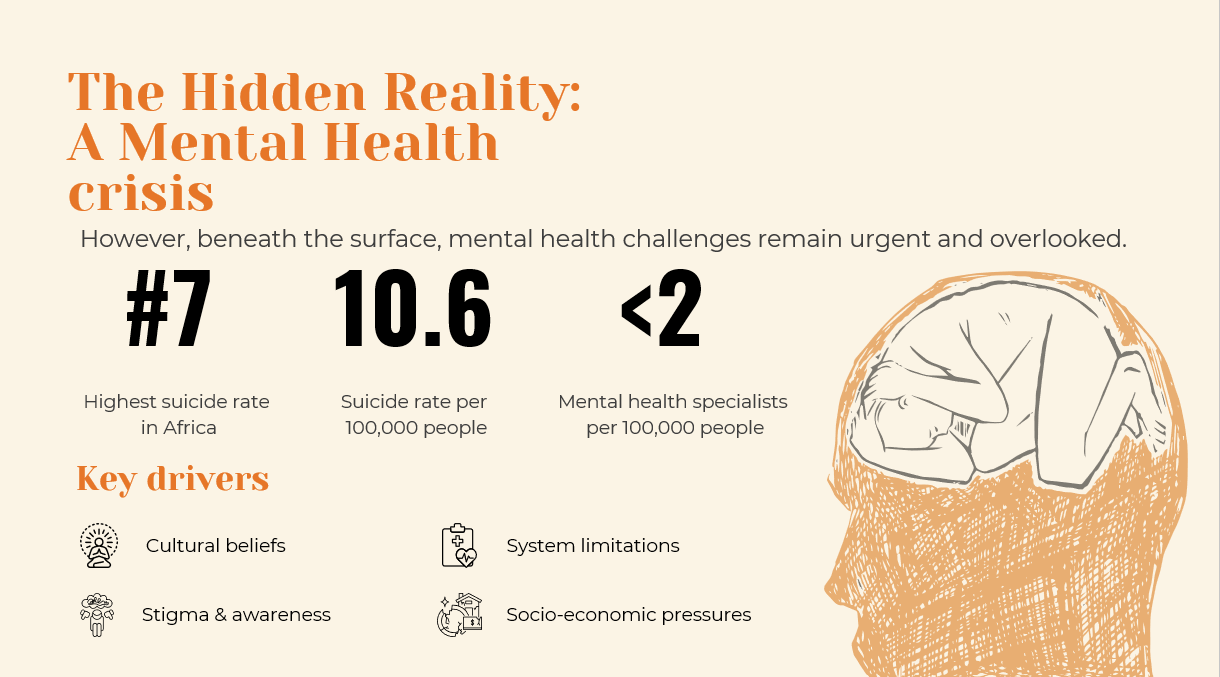
Both organisations highlighted a stark reality: access to mental health care remains incredibly limited. In Mozambique, where Um Pouco d’Arte is based, there are fewer than two mental health specialists per 100,000 people. In Pakistan, where CFAW operates, the figure drops to just 0.19 psychiatrists per 100,000.
Even when services are available, traditional approaches don’t always work, especially when people find it difficult to put their inner turmoil into words.
This is where arts-based approaches come into their own.
Creative practices open a door to healing by removing pressure and giving people new ways to express themselves. Through art, participants can explore painful experiences, uncover new possibilities, and begin to reclaim a sense of agency in their lives.
CFAW and Um Pouco d’Arte use a wide range of creative methods: clay, movement, dance, music, cooking, patternmaking, drawing, poetry, and storytelling, all designed to help people connect with themselves and others.
During the session, we were guided through a personal storytelling exercise that gently invited us beneath the surface. We created a small, folded book or ‘zine’, using coloured paper. The simple, tactile act of folding helped shift our perspective and open a space for reflection.
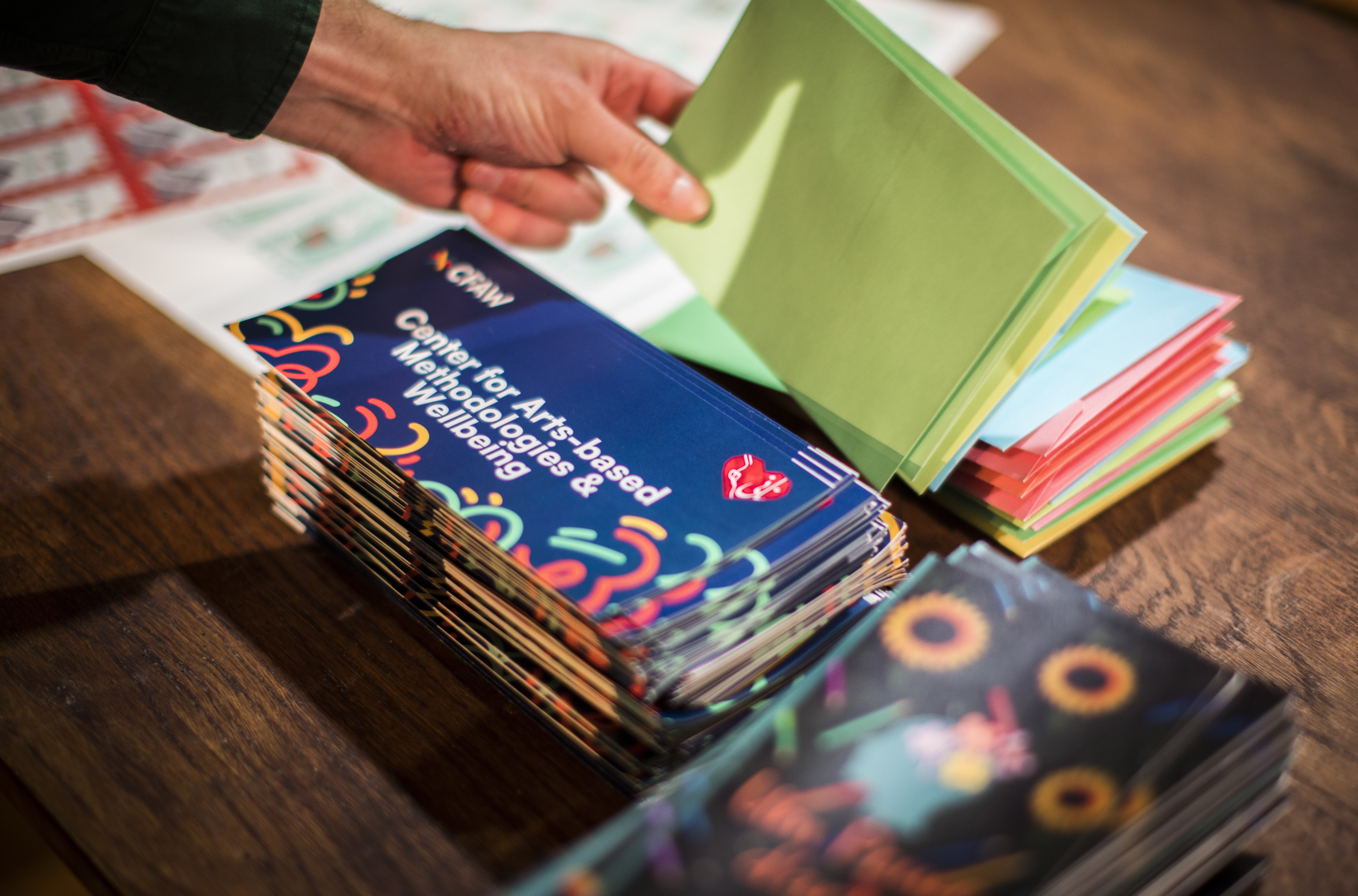
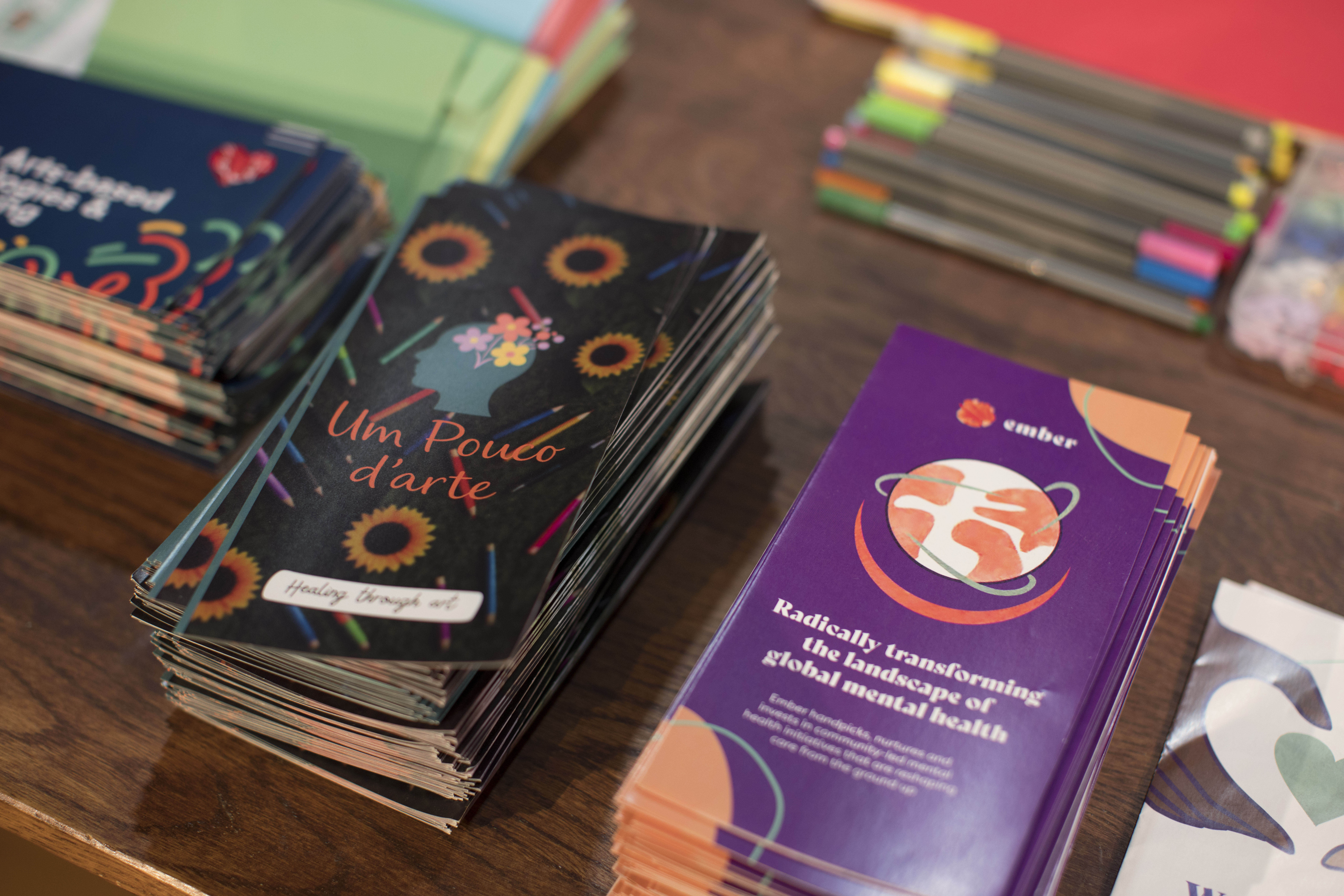
By responding to prompts without overthinking, we began to rewrite our own stories, moving beyond job titles and labels to reconnect with our humanity, what truly motivates us and how we want to show up as changemakers.
Personally, I felt a surprising lightness. The direct words of truth replaced any need to over-explain. And the booklet I’d created the left me with a simple but powerful reminder of the contribution I can make, beyond conventional measures.
The power of small, community-led groups
What makes community-led mental health approaches so effective is their emphasis on small, empathetic groups. These groups create the safety and connection participants need to share openly and begin imagining new possibilities, to the point where they actually create them.
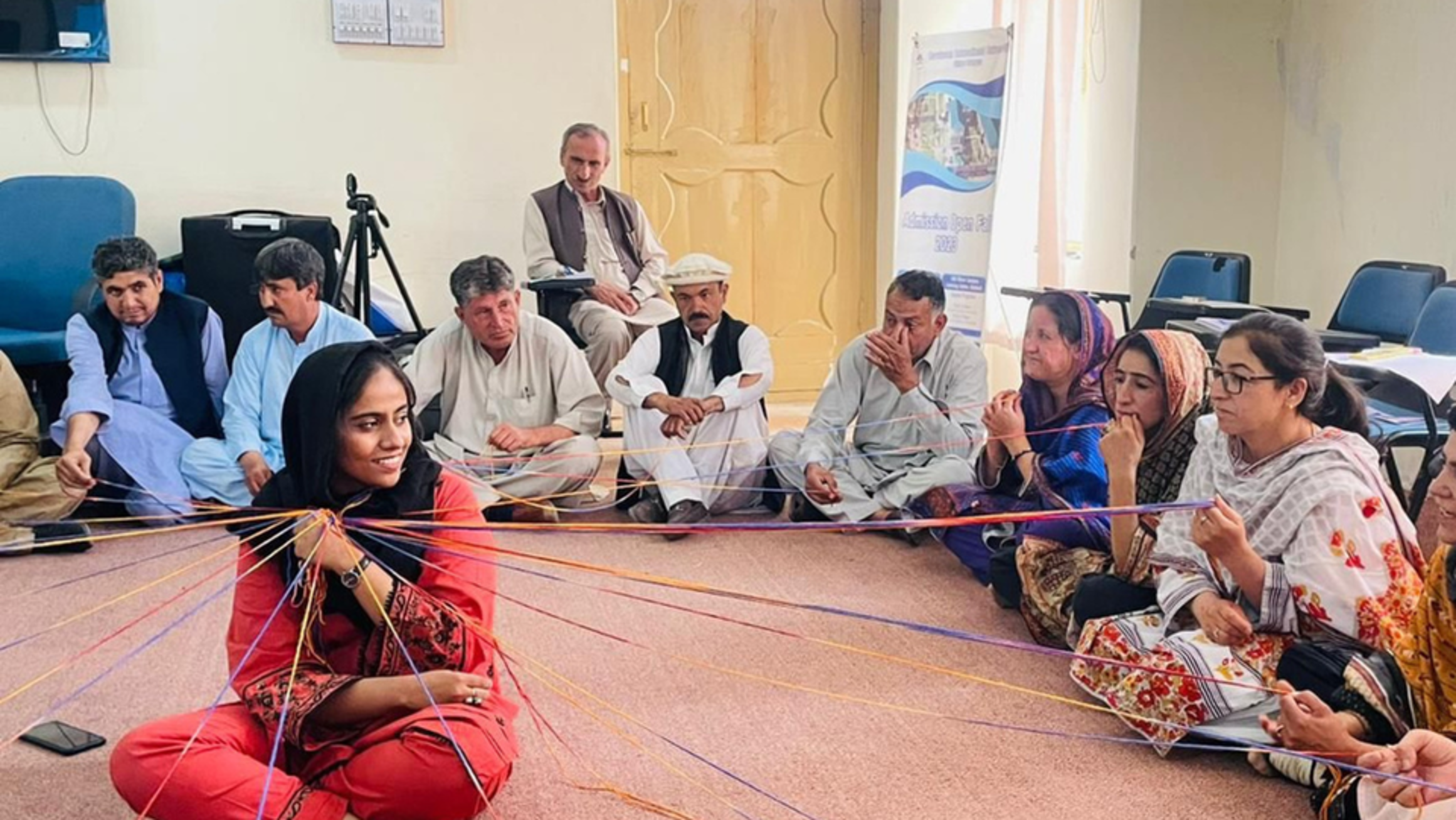
CFAW’s Yarn Circles are a beautiful example. Rooted in the cultural value of connection beyond self in Pakistan, participants are invited to see themselves as threads, interwoven with others, each playing a part in a larger pattern of shared experience.
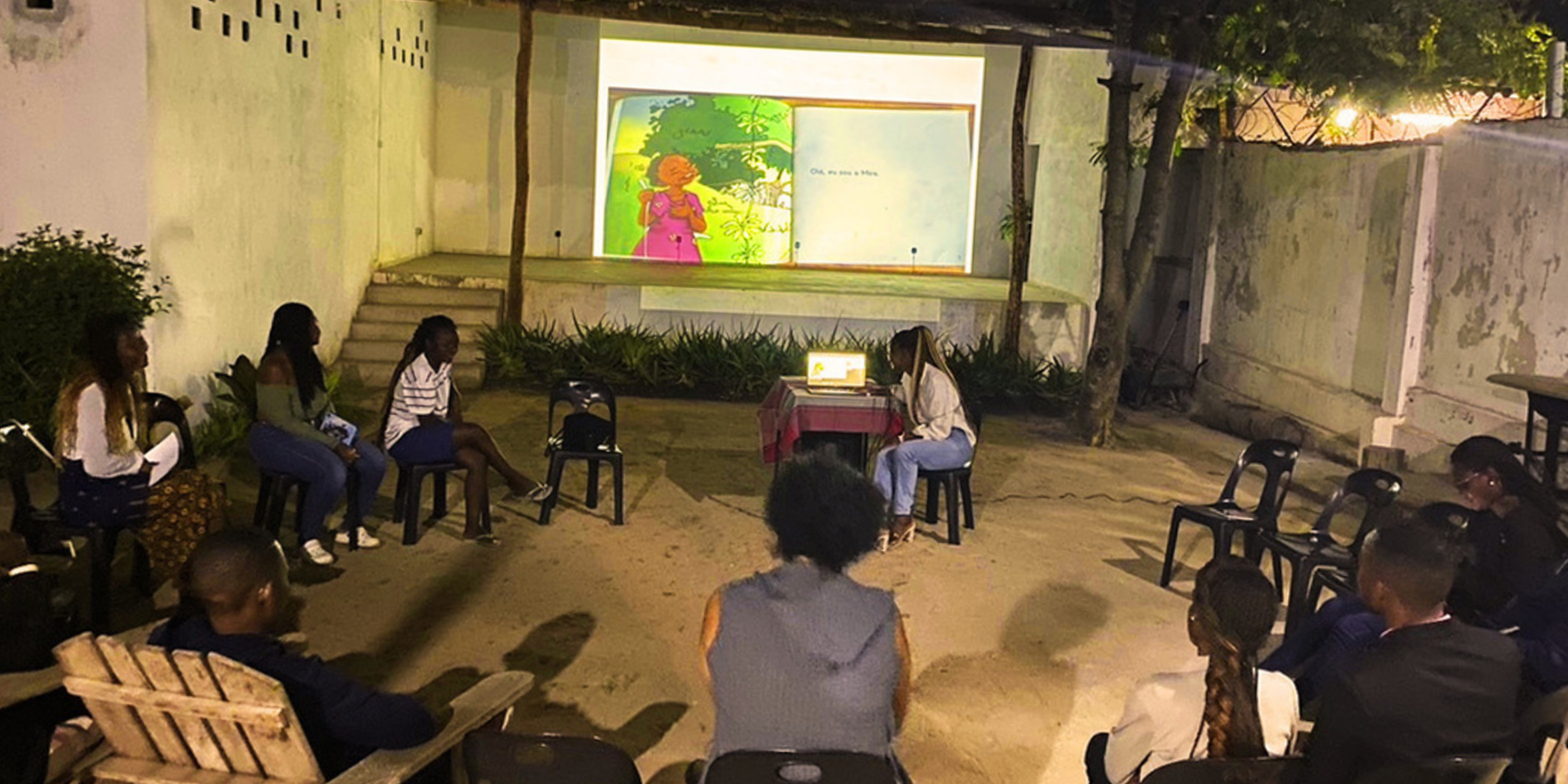
Um Pouco d’Arte understand the connective power of small groups. Beginning as a small group of friends with a shared need to feel, express, and connect, their work is grounded in the Ubuntu philosophy: “I am because we are.” In other words, healing happens through connection—by seeing each other and being seen.
Impact
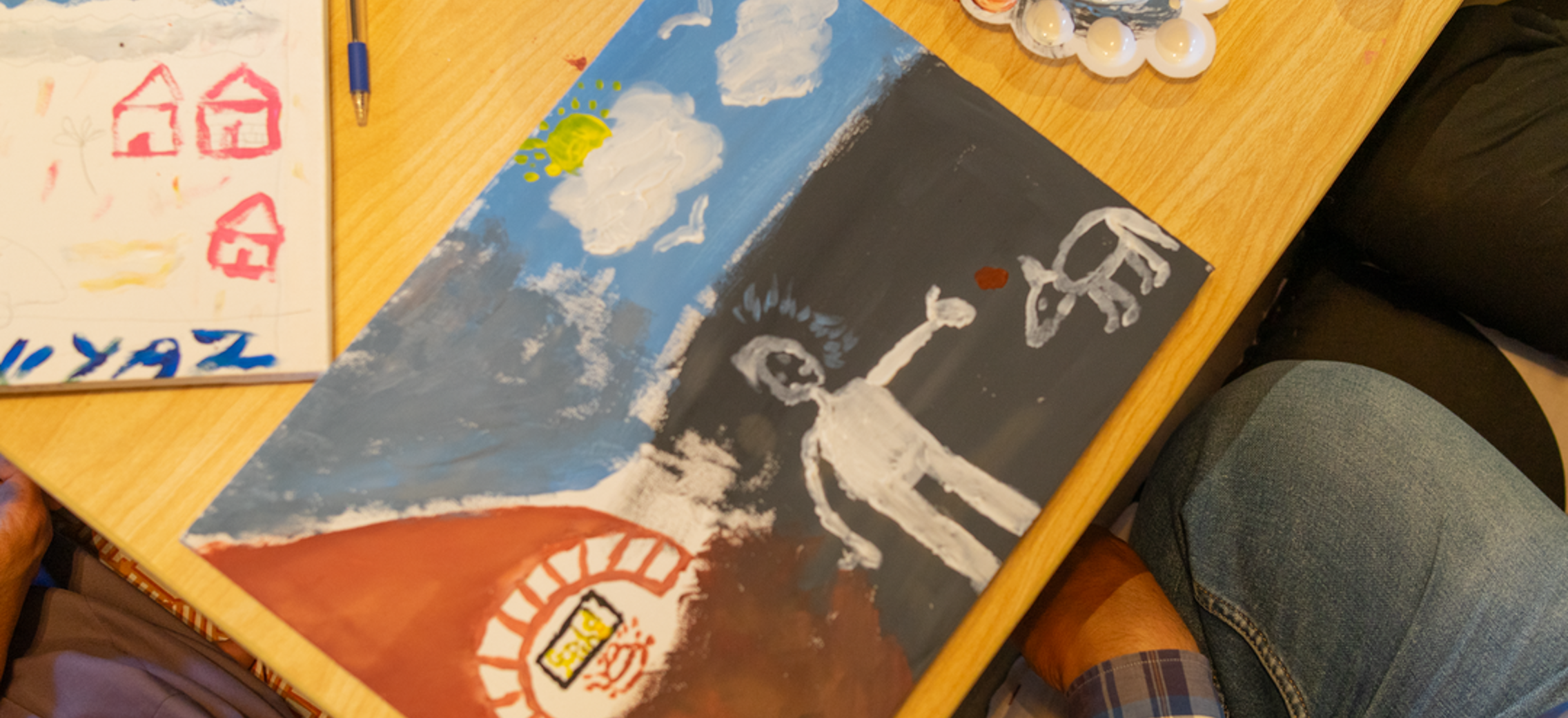
CFAW shared their work with vaccinators facing intense stress and pressure in extreme conditions. Through “Challenge Mapping” sessions, participants expressed their experiences visually—externalising what often felt overwhelming.
As one vaccinator reflected:
“Once I saw what my life looked like on that canvas, I wanted to change my perspective, my choices, and learn how I can communicate my boundaries.”
Um Pouco d’Arte’s Wagaia programme has created safe spaces for survivors of gender-based violence. Through creative therapeutic activities, including comic strips that transform real-life stories into pathways for healing and justice, they’ve reached over one million people through campaigns that spark dialogue and action.
Notably, 30% of engagement comes from men, signalling growing awareness and involvement. What’s more, 25% of interactions show survivors considering speaking out—an important step towards justice.
In-person connection
Beyond the stage, something equally meaningful unfolded.
Spending time together as a global group felt like a creative act, in and of itself.
We were reminded that some of the most valuable ideas and connections emerge in the “in-between” moments: sharing meals at the food market, walking through Oxford’s beautiful architecture and parks, and exploring its bookshops and stationery stores together.
These informal moments deepened relationships and reinforced a simple truth: connection is at the heart of both creativity and care.